The press conference for the presentation of the renovation and refurbishment project of the Palazzo della Cultura in Corso Europa, which houses the Irpino library and museum, took place on 29 December 2020 in the Grasso room of Palazzo Caracciolo, the seat of the Province. Present were the president Domenico Biancardi, the directors Rosanna Repole and Franco Di Cecilia, the architect Massimo Russo who drafted the project.
According to the architect Massimo Russo, the renovation and re-functionalization of the Palazzo della Cultura is part of a new cultural vision: museums are changing, from static and immobile deposits of works, to places of expressive freedom, communication, new forms of socialization and interaction with the public.
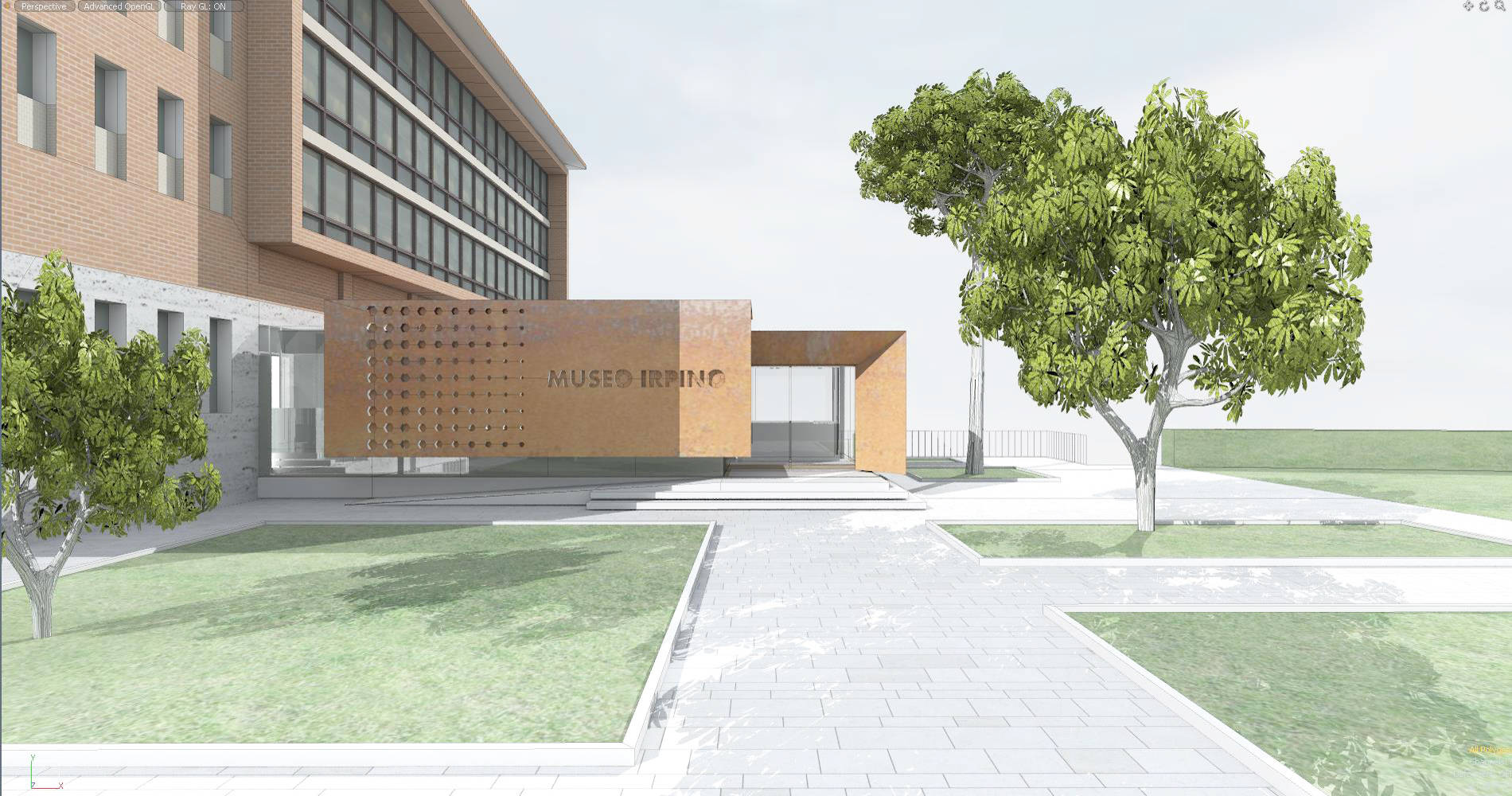
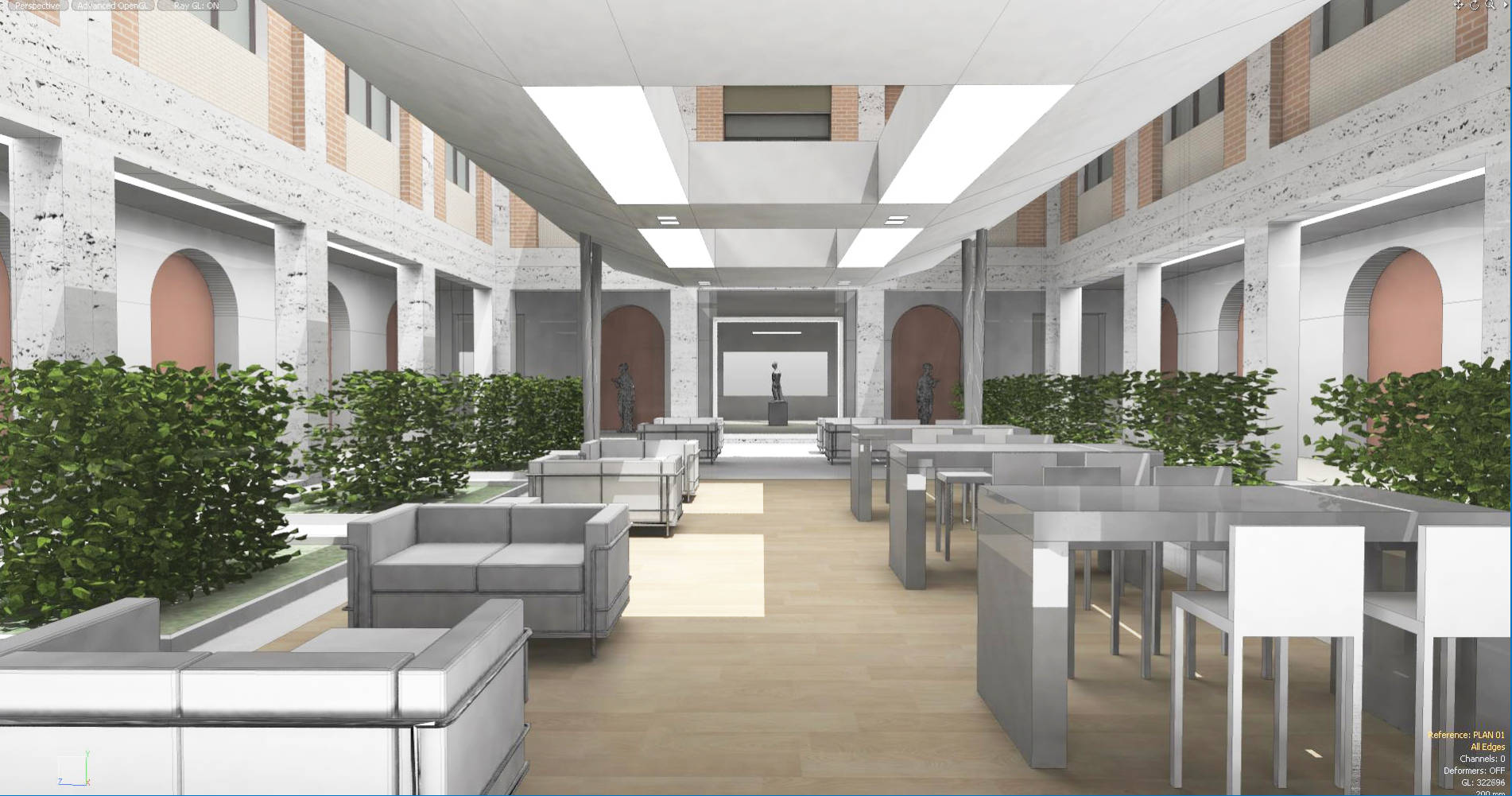
In order to create an adequate space for a refreshment area and a reading-meeting room, and in order not to interfere with or reduce in any way the current path and exhibition space, it was necessary to create two new small volumes, light, reversible, with great transparencies. They are imagined as two new large display cases, a metaphor for the internal ones that house the exhibition itinerary; also light, in glass, they are the cases of our time, which enclose and protect the new possible socialities, the new lymph of vitality, in continuity and in symbiosis with the cases that guard culture and history.
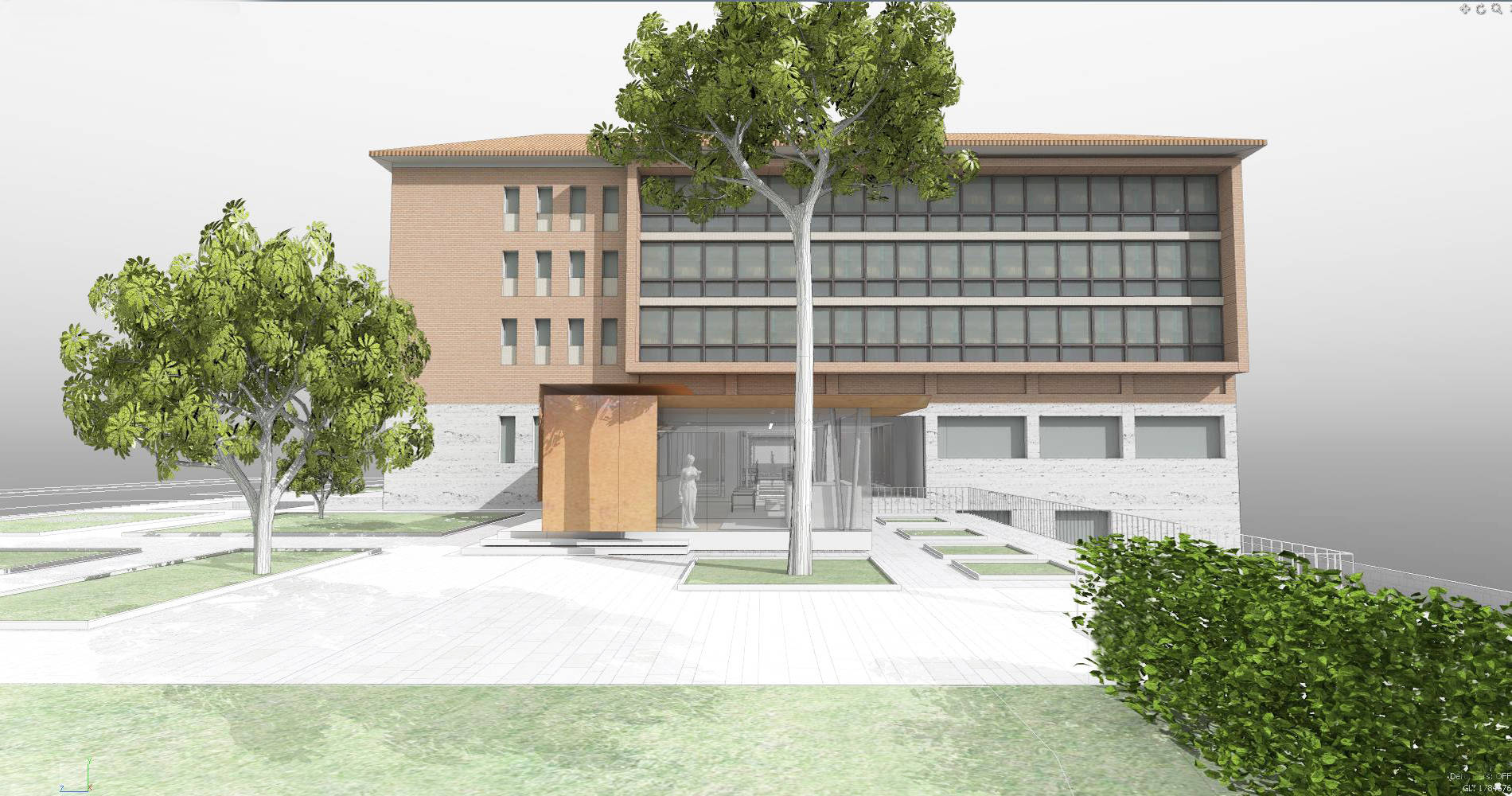
The first volume, positioned towards the external garden, is configured as a new entrance on the ground floor of the museum, avoiding the overlapping of flows with the upper floors and redefining a correct distinction between the exhibition area, filtered and delimited by turnstiles, from the one that can be freely visited. . The new entrance thus orders and differentiates the flows also giving the possibility to receive a new type of visitor, who wants to spend a moment of his day, with a coffee in the museum of his city, and enjoy a space unique inside the court.
The new spaces designed read an intuition of the architect Fariello, namely the connection, on an ideal axis, between the internal courtyard, the mosaic and the garden. In fact, the large glass window that opens onto the green from the mosaic is clearly visible, but is now closed by supervening shutters that enclose it. It is precisely on the reading of this important spatial sequence that the compositional tension of the project is generated.
The new volume inside the courtyard, which takes the visitor into the heart of the museum, tends towards the external garden, passing on a light glass walkway over the mosaic, connecting to the entrance volume, which in turn, the new door of the from hinge to the internal exhibition space towards the external space of the garden.
Another ideal axis that is realized, with the repositioning of the new entrance to the Museum, is the visual continuity with the two main entrances of the municipal villa, up to the Corso of the city, a metaphor for the desire to attract the vitality and sociality that characterizes the city centre.